Linda Nagata: the blog at Hahví.net


Archive for the 'Reading' Category

Books By Gender

Tuesday, March 27th, 2012

I like to read adventure novels. Science fiction, fantasy, historical: I enjoy them all. The important thing for me is a good, meaningful story, which by definition requires well-drawn, interesting characters. I like to think that it doesn’t matter to me if an author is a man or woman. I choose particular books because people whose opinions I respect have recommended them, or because I want to see an example of an author’s work, or just because I happen to stumble on a book that sounds intriguing.

But it’s always a good idea to pause now and then, and check perceptions against fact. Inspired by discussions around the web about reviewers paying more attention to books written by men than by women, I decided to check my own reading record. So I went over the books I posted as “read” on Goodreads.com over the last year.

(I think I’ve mentioned before that I’m a slow reader.)

I recorded eleven books written by men, three of them by the same author, and six written by women, again three by the same author. I started a lot more books than this, using downloads of sample chapters, but these are the books I finished. All but two are science fiction or fantasy—and clearly, in this past year, I’ve been reading more books by men.

What does it mean? I don’t know that it means anything—but here’s another interesting statistic. (Interesting to me, anyway.) Of these seventeen books, only three had female lead characters. I find that … startling. Several of the books had strong and prominent female characters, but they were nevertheless secondary to the main male character.

At this point, I can’t help going back and taking a look at my own novels. Out of nine, three have male lead characters, three have female leads, and three have shared leads—though these last three are probably weighted toward the male side.

Why do I choose the characters I choose? I’m not entirely sure. I choose characters I like. I choose characters that take up residence in my head. Sometimes I debate with myself on what gender I should choose.

Memory was written in first person, from a female point of view. I wanted to do a first-person novel, and I have a vague recollection of being put-off by the idea of writing an entire novel as male first-person. Fast-forward to today: the current work-in-progress happens to be first person from a male point of view. I’ve recently discovered there’s a term for this: “cross-gender narration.” I wonder if it’s a mistake, from a marketing perspective, but it is what it is.

Over the coming year I’ll continue to sample books from a spectrum of authors and genres, and now and then I’ll make myself read a book just because I think I should. But mostly, I’ll continue to read just what I like and maybe next year the tally will look different.
What’s An Ebook Worth?

Wednesday, March 21st, 2012

I don’t pay close attention to new releases, but lately I’ve had the feeling that the price of ebooks from traditional publishers is going up–or maybe it’s just the prices of particular books? I presume this is the result of agency pricing, but I’m okay with that.

I think I’ve mentioned here and there that I’m not averse to paying $7.99 for a novel that I really want to read and I’ve bought several in this price range. I even bought one or two for $9.99 when I first got my Kindle in the fall of 2010. I think prices dropped for a time after that, and I didn’t think I’d ever be lured into paying more than $9.99 for a novel.

But I was wrong.

Yesterday I set aside my principles on ebook pricing and paid $10.99 for the third Sandman Slim novel, Aloha From Hell, because I really wanted to read this book now. And you know what? The author, Richard Kadrey, deserves to make some real money on this series. I hope he’s doing just that.

I would have felt better paying less, and I suspect there aren’t very many books that I have to have right now — but as I’ve said before, when it comes to reading, it’s my time that’s the limiting factor. If I have to pay more to read the books I really want to read in the time I have available, well, evidently I will.

New At Book View Café

Tuesday, March 20th, 2012

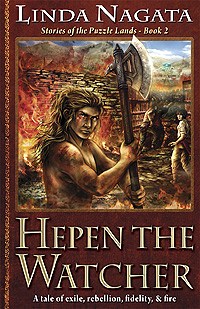
The ebook version of Hepen the Watcher is now available at Book View Café, so if you’ve been waiting to get a copy, now’s your chance! It’s available in both epub and mobi formats.

Special note for those of you outside the “Amazon countries”: there is no download fee if you buy from BVC. You pay a straight $4.99 USD like everyone else.

And to everyone, if you want to wade in cautiously, BVC also offers free sample chapters in epub and mobi formats.

Today though is not just about my book. It’s mostly dedicated to BVC’s newest member, Lois Gresh, the New York Times Best-Selling Author of 27 books and 45 short stories. Her books have been published in approximately 20 languages. Lois has received the Bram Stoker Award, Nebula Award, Theodore Sturgeon Award, and International Horror Guild Award nominations for her work. She debuts at BVC with her collection Eldritch Evolutions, her first short story collection.

And that’s not all! Also debuting today at BVC is a fantasy novel, Swords Over Fireshore by Pati Nagle. Pati’s stories have appeared in Asimov’s Science Fiction, The Magazine of Fantasy & Science Fiction, Cricket, and others. She was a Writers of the Future and Theodore Sturgeon Award finalist. Her novels include the Blood of the Kindred series (The Betrayal, Heart of the Exiled), and urban fantasy Immortal.

Please stop by and visit us at Book View Café.

Book Rave: Sandman Slim

Tuesday, March 6th, 2012

(cross-posted from Book View Café)

Richard Kadrey’s Sandman Slim was released to wide acclaim in 2009, but I only discovered it last week, and that happened in a roundabout way:

My own novel Hepen the Watcher: Stories of the Puzzle Lands – Book 2 should be out later this month. When Book View Café authors have a new release, one of the promotional strategies we use is to give away a hundred copies of the ebook via the Early Reviewers program at LibraryThing.com. One of the requirements of this program is to supply a list of five titles somewhat similar to the book being promoted so that, with luck, the book will find those reviewers most likely to enjoy it.

Hepen the Watcher and its predecessor The Dread Hammer are unusual books. They’re sort of like sword and sorcery, because they have swords, and, well, sorcery — or magic anyway. But they’re not very traditional. Both are short, fast-paced, violent, and shot through with dark humor and feminist themes. I asked a couple of people who’d read them if they had any suggestions for similar books. The answer in both cases was, “Um, not really.”

So I turned to Google, searching on terms such as “fantasy” and “dark humor.” Sandman Slim kept showing up in the results, so even though the setting was entirely different from my books, I downloaded a sample, started to read it, and was immediately hooked.

The book is the story of James Stark, who was spirited away to Hell through the machinations of “friends” who turned out to be not-so-friendly after all. Stark is the only living human to ever set foot “Downtown,” and he survives there for eleven years before escaping back into the world in search of revenge.

And that is all I’m going to tell you about the plot, but I will add that if you’re offended by the movie Dogma, you probably won’t like this book. Sandman Slim is irreverent, violent, funny, clever, and so compelling that it’ll probably take me a couple days to catch up on my sleep.

It’s also a wonderful example of the sympathetic antihero. Not long ago I started to read another acclaimed book whose title shall go unmentioned. This one was also violent, but not at all funny, and I found no sympathetic or likable characters anywhere at all in the opening chapters. I didn’t finish that book. By contrast, James Stark, despite his violence, is a character to root for because he really does give a damn, he knows when he’s done wrong, he feels guilt, and he’s capable of love.

And for the writers out there, if you ever want a lesson on how to weave in the back story in a first-person narrative, Kadrey does a wonderful job of it in this book.

My only complaint about Sandman Slim is on the quality of the ebook. I read the Kindle version, and found it loaded with an unbelievable number of repeated, out-of-place, and incorrect words. Any competent proofreader should have picked up most of these, so I can only surmise there was no proofreader for the ebook.

But don’t let this stop you. If you read ebooks, then grab a sample. You’ll know within a few pages if this is a book for you. Print versions are also available, of course.

A List of Classic Science Fiction For Kindle

Tuesday, February 7th, 2012

It’s fun to be included on worthy lists! Wired Magazine’s Geek Dad (Erik Wecks) has a post up on 102 Essential Science Fiction Books for Your Kindle. The idea was to list one book per author, said book being presently available on Kindle. The article displays thumbnails of the current book covers to help you browse:

Here you can pick a book by its cover and not worry that you are getting junk with good art. Happy hunting.


Deception Well is Erik Wecks pick for my representative book, which surprised me, as people usually go with Vast or The Bohr Maker first, but hey, it’s okay with me!

Some interesting commentary on the list can be found from Jim Higgins at Milwaukee’s Journal Sentinel.

The Kindle limitation guarantees some gaps in his list, as fine and historically wide-ranging as it is […] But there is much to like and praise about Wecks’ list, including its historical diversity and its attention to the work of female writers.

Looking at the list, I know I have a lot more catch-up reading to do. How about you?

Writing Expertise, aka Practical Meerkat’s 52 Bits of Useful Info for Young (and Old) Writers

Friday, February 3rd, 2012

Like most writers, it took me a long time and a lot of rejections before my first novel sold. This was a good thing. I am so very, very glad that the first book an agent ever took to market for me never found a buyer. In these modern days I suppose I would have gone ahead and published it myself—and then I would be faced with the fact of its existence ever after. We hate to admit it, but often, a rejection is a good thing.

The second novel of mine that ever went to market was an early version of The Bohr Maker. It was turned down many times, and with the most painfully “almost but not quite” rejections I ever hope to see.

For some reason I was flipping through the file a few months ago and discovered this gem of a rejection, addressed to my agent and later forwarded to me:

“This is the worst situation I can think of: really liking a book, and having to pass on it…The author has a very complicated vision working here, and I’m not sure that it works. There are so many threads, and so many changing viewpoints, that it becomes difficult to see where it all comes together, or how – or why…”

This was written by Laura Anne Gilman, who was then an editor at Berkley—and Laura Anne knows of what she speaks! Because of notes like this one I finally pulled the manuscript from the market and rewrote it from beginning to end. When it went out into the world again, it sold to the first publisher that saw it, and went on to win the Locus award for best first novel.

But it never would have been rewritten if I didn’t have experts in the field like Laura Anne telling me in very clear terms that something was lacking and it needed to be rewritten.

Expert advice is a great thing to have, even if it’s painful in the moment.

Laura Anne and I recently crossed paths again at Book View Café, and shortly after that I discovered that she works as a freelance editor. This past fall I hired her to edit my soon-to-be-released novel Hepen the Watcher. She gave me a great critique, asking me to explain things, fill in holes, and take advantage of dramatic opportunities that I’d missed on my own, and the book is much stronger for it.

Over the past year, Laura Anne has been writing a weekly post at Book View Café’s blog on a wide range of practical aspects of writing and publishing. Those posts are now available in ebook form under the title Practical Meerkat’s 52 Bits of Useful Info for Young (and Old) Writers. If you’re at all interested in writing professionally, I urge you to take advantage of Laura Anne Gilman’s writing and publishing expertise by picking up a copy at Book View Café. I’ve got mine! At only $2.99, how can you go wrong?

The Cloud Roads and The Serpent Sea

Tuesday, January 31st, 2012

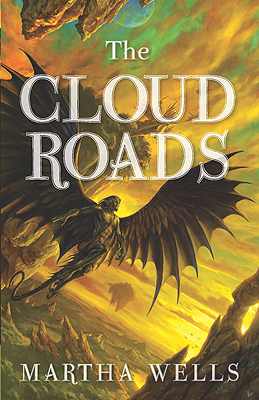
There is endless debate on what makes a story science fiction and what makes it fantasy, and I have no intention of entering those dangerous waters, but I am going to dabble my toes in a sheltered inlet and make a few observations about Martha Wells’ Books of the Raksura, represented so far by last year’s The Cloud Roads and the just-released sequel The Serpent Sea. Both are wonderful books, and I’ll be scooping up the third volume when that comes out.

The protagonist in these books is Moon, a being who can shift between groundling form (basically human) and a rather fierce and dangerous winged being. Moon is an outsider, belonging nowhere, but desperately wanting to belong, though unwilling to admit it. His story unfolds within a fascinating, and incredibly diverse and detailed story world, and his adventures therein are enthralling.

But aside from the great story telling, one aspect of these books that I find very appealing is the way that magic is “built in” to the story elements. For the most part, magic is not something to be learned and mastered, it just is. Magic allows Moon to shape-shift, but not because he’s particularly clever. The magic he uses is simply a biological trait of his species, the Raksura. Just as you and I learned to walk upright at an early age, the Raksura learn to walk upright and also to shape-shift. Almost everything else about them is due to biology, not magic, and Martha has soundly developed that biology—along with the biology and societies of several other species and cultures along the way.

As another example of built-in magic, there are “flying islands.” Yes, literally. And how utterly logical that a chunk of rock from a flying island could be used to levitate other things.
Which is a long way of saying I admire the logic of these books. In both science fiction and fantasy we’re asked to suspend our disbelief about the plausibility of one or more elements. The Books of the Raksura introduce those elements without the arm-waving and explanation that would be required in a science fiction novel, but the implications of those elements are worked out with great rigor. Having spent the first part of my career writing “hard” science fiction, I truly admire that. In thinking about these books I keep remembering Arthur C. Clarke’s very famous quote: “Any sufficiently advanced technology is indistinguishable from magic”—and I can’t help wondering if maybe the magic in these books is some highly advanced technology after all.

David Brin’s SF & Fantasy List

Wednesday, January 25th, 2012

David Brin has posted a long list of his favored science fiction and fantasy, divided into categories. I’m proud to say I get a mention under “The Hard Stuff.” Check the whole list out here.

Thanks to @keith_johnston on twitter for pointing out the list!

Guest Post: Joshua Palmatier
(aka Benjamin Tate)

Monday, January 23rd, 2012

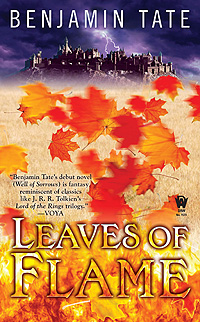
Please welcome Joshua Palmatier, who has written a guest post on the nature and necessity of dark, gritty fantasy — a subject especially relevant and interesting to me as I get ready to publish my own gritty tale. Joshua is the author of, most recently, Well of Sorrows and its just-released sequel Leaves of Flame both written under the pen name Benjamin Tate.

First off, thanks, Linda, for inviting me to guest blog today. I really appreciate it.

I recently attended Arisia, an SF&F con in Boston, and while there I participated in a panel called “Mud and Blood: The Grittier Side of Fantasy.” This was not a surprise, since the most common adjective used to describe my book is “gritty.” But the basic idea behind the panel was to talk about dark fantasy. I thought it would be a good topic for my guest post.

The main question is, what is it about dark fantasy that intrigues me as a writer, and do I really need to include all of the mud and blood, the dirt and grit? The answer is yes. *grin*

I have to admit that I don’t sit down and intentionally write “dark fantasy.” I never thought of my books as dark, I simply wrote them, the way they wanted to be written. (I’m an organic writer, which means I just sit down and write to see what happens; very little planning ahead of time.) And for me, a book and the characters in it aren’t realistic unless they have to deal with the mud and blood, dirt and grit. Those are the elements that make the world real for me, and so I include them naturally. They’re a part of life.

I also feel that people don’t change unless they’re forced into it. We’d all rather stay the way we are, so in order for a character to have a believable character arc in a book, some rather serious and significant emotional pain needs to be inflicted. We often joke that writers like to torture their characters, but it isn’t really a joke. If we expect the character to change, SOMETHING has to happen. Often, that “something” isn’t nice. And in the end, this is what makes characters interesting and gets the reader involved. Being forced to deal with the gritty reality of life is what draws the reader in and makes them sympathetic to the character.

That doesn’t mean that, as a writer, you can’t take it too far. There is a line that has to be drawn by every writer and every book, a line that the mud and blood, dirt and grit, shouldn’t cross. It differs from book to book, but a reader can only take so much grime and so much character torturing before they lose their sympathy and simply start thinking the writer is cruel. Writers need to balance the “dark” with some hope. In my first book, THE SKEWED THRONE, my character, Varis, starts out in the slums called the Dredge. I spent a lot of time trying to make the Dredge as real and believable as possible. Varis is struggling to merely survive, and for a while it feels as if she may not succeed. I couldn’t possibly write an entire book where this was the dominant feeling. At some point, you have to introduce something to counter the grit and give the reader hope that things will change. In my book, Varis meets a Seeker named Erick, who begins training her to be an assassin. That doesn’t mean there aren’t painful experiences yet to come, even after she escapes the Dredge, but at every stage there is hope that, sometime soon, good things will come. And eventually, they do.

So, in my opinion, you need some mud and blood, some dirt and grit, in order to make the world feel more real, and in order to make the character arc believable. Making the world believable in a fantasy novel is even more important than in other novels. But you have to be careful that you don’t take it too far and alienate the reader from not only your world, but the sympathy they have with your characters as well.

Joshua Palmatier (aka Benjamin Tate) is a fantasy writer with DAW Books, with two series on the shelf, a few short stories, and is co-editor with Patricia Bray of two anthologies. Check out the “Throne of Amenkor” trilogy—The Skewed Throne, The Cracked Throne, and The Vacant Throne — under the Joshua Palmatier name. And look for the “Well” series — Well of Sorrows and the just released Leaves of Flame — by Benjamin Tate. Short stories are included in the anthologies Close Encounters of the Urban Kind (edited by Jennifer Brozek), Beauty Has Her Way (Jennifer Brozek), and River (Alma Alexander). And the two anthologies he’s co-edited are After Hours: Tales from the Ur-bar and the upcoming The Modern Fae’s Guide to Surviving Humanity (March 2012). Find out more about both names at www.joshuapalmatier.com and www.benjamintate.com, as well as on Facebook, LiveJournal (jpsorrow), and Twitter (bentateauthor).

Martha Wells’ The Serpent Sea is Out

Friday, January 13th, 2012

Back in May I blogged about Martha Well’s novel The Cloud Roads, a book that I enjoyed immensely. The sequel is now out, titled The Serpent Sea. But there’s a problem: In the world of traditional publishing the success of a book is usually determined by how well that book sells in its first month of release, and how well a book sells is strongly dependent on how many copies are sitting on bookstore shelves. The word is that Barnes & Noble, the last big chain bookstore, is carrying The Serpent Sea in only a limited number of stores. This is an utter shame, when the work of a great author is no longer out in public view. So some of us are getting the word out to let fans of The Cloud Roads know that the sequel is live! If you still read paper books, consider ordering The Serpent Sea from your local B&N. That way, the store’s book buyers will know they ought to have some copies on their shelves. It really does make a difference. I just started reading my copy (ebook). More soon.