Linda Nagata: the blog at Hahví.net


This View Never Gets Old

June 10th, 2011

Drove up to the top of the mountain this morning. “The” mountain–Haleakala–is a massive shield volcano that makes up all of East Maui. The summit stands at 10,000-feet, with views all the way down to sealevel, at least during those hours when the clouds allow it. This morning the summit was clear but it stood above a sea of gleaming clouds.

Middle of the day is a terrible time to take photos, but here are some samples anyway:

Sea of clouds surrounding Haleakala summit

An opening in the clouds showing the eucalyptus forests near the town of Makawao. This is looking down from roughly 9000' to maybe 1500' in elevation

I was told long ago the name of this peak, Hanakauhi, can be translated as "maker of mist." Not sure it's true, but it would be appropriate.


Looking across the south wall of Haleakala Crater, towards Mauna Kea on the Big Island, where I was a few weeks ago.

Triage

June 10th, 2011

The To-Do List is like triage. Goals shift depending on who/what needs me the most. The top level tier of stuff I’m working on includes:

1-At least 1000 words/day on the work-in-progress

2-Tweak all the ebooks, prepping them for my upcoming launch at Book View Café

3-Upload new cover for Memory and do some promotion on this neglected novel.

4-Write a long overdue blog post for someone

5-Prepare print versions of The Nanotech Succession books (about 30% into this)

6-Proof and upload the first short story I’ve converted to ebook

7-Get more active in the marketing class I’m taking from Who Dares Wins Publishing

Not necessarily in that order.

The Wounded Man

June 8th, 2011

Reading Martha Well’s terrific novel The Cloud Roads got me thinking about the archetype of the wounded man, because the hero of this book definitely qualifies, at least under my definition.

The “wounded man” isn’t physically wounded of course. Neither is he weak or incompetent and he can be wonderfully, overwhelmingly manly. But on some level he’s emotionally scarred from the mistreatment he’s received from life, and he’s got emotional issues, and usually he isn’t good at establishing relationships with men or women. So the inner plot is usually about our wounded hero learning to open up to others, in particular the love interest.

My thesis is that women tend to love the wounded man archetype, and men are much cooler toward it. Am I right? Am I wrong? Is it a generational thing? What do you think?

In my own work I’m going to point to two of my novels, Deception Well and Vast, which share two male characters named Lot and Urban. Lot sort of fits the definition of the wounded man. He has emotional issues (though he’s usually good at relationships, ha ha). Lot’s BFF, Urban, is emphatically not a wounded man. He’s cocky and confident. No self-esteem issues here.

My guess is that men prefer Urban’s character, and women tend to prefer Lot. Yes? No? Let me know what you think on the question of “the wounded man,” whether you’ve read the books or not. I always suspect I’m kind of “off” when it comes to being representative of my gender. I’d love to hear some opinions.

Odd Weather

June 7th, 2011

Usually by the time June rolls around we’re facing imminent water restrictions in Kula. This year hasn’t had a lot of rain but more than we’ve grown accustomed to, and I like it.

This past week or so most days have started off brilliantly sunny–which does not encourage me to undertake my morning run–but by midday heavy clouds have gathered around the mountain. Sometimes we get rain, but most often it’s just a bit misty and delightfully cool. So I’ve started changing my running time to later in the day. It’s a nice break. Today’s run was extra pleasant with a light mist falling and gathering in droplets on me and everything else around.

Have you tried to raise the price of your ebook lately?

June 6th, 2011

I’ve raised and lowered the price of ebooks in the past without problem–until now.

Right now most of my books are for sale only at Amazon and Barnes & Noble. Both stores have a policy that you have to offer the books at the lowest cost they’re offered anywhere. If you don’t, they will adjust the price for you.

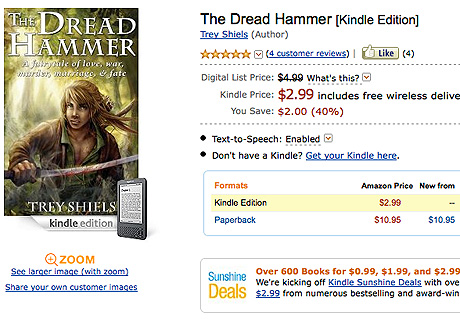
In late April I released my latest novel, The Dread Hammer, under my pen name, Trey Shiels. I set the price of the ebook at $2.99 as an introductory special, good through May. Late on May 31 I updated the pricing to put it in line with my other novels, raising it to $4.99.

On June 1 I saw this:

My first thought was “huh?” My second was “is it part of the sunshine deals promotion?” My third was “uh oh.”

I’ve never heard how long it takes either Amazon or B&N to figure out that a list price is higher at their store than at the competitor, but I’ve had the impression from people that it takes several days.

Suppose that’s not the case anymore.

Suppose that, before processing the price change, Amazon executes a quick, automated inquiry to B&N, finds the ebook listed at $2.99, and converts my listing to a $4.99 list price with a 40% discount.

Suppose further that B&N institutes a similar fast cross-check system, querying Amazon, and confirming that the book is still being sold there for $2.99–and refuses to raise the price.

I don’t know if this is what’s going on. It’s never a great idea to extrapolate too much from one sample. But The Dread Hammer ebook is still being sold at both stores for $2.99, six days after the price change, and processing of the update appears to be complete at both sites.

An inquiry to Amazon has basically confirmed the B&N price is the reason the book is discounted. I haven’t heard back from B&N.

If neither store will raise the price first, things get complicated. Do I need to take the book off sale at B&N, raise the price at Amazon, then put it back on sale at B&N at the higher price. That seems pretty silly, doesn’t it?

As I said, I’ve raised prices before without problems. Maybe this time around I’m just a victim of bad timing. I’ve been flirting with the idea of doing a 99-cent promotion, but I’m now feeling cautious about lowering the price knowing it might be hard to re-adjust it later.

Feedback? Has anyone else run into this?

From Scene Sketch to Scene

June 5th, 2011

I usually “outline” a story by writing a general tell-don’t-show description of the key points. This makes me feel secure. I know what’s going on. All I have to do is write it!

But my outlines are summaries. Actual scenes are often lacking. So I sketch out scene summaries, in which stuff happens. An example of a scene summary follows. It’s from the work in progress, but it’s pretty incoherent and I’ve left out a detail or two, so by the time you read the book I doubt it will qualify as a spoiler.

That morning, Ui is sitting beside Beyel, who is driving the wagon. The country is getting more rugged. The road is climbing. The oxen are slow. A carriage passes them. Ui freaks, because it’s the master’s carriage, and Hammond is driving. She scrambles back into the wagon to avoid being seen—not that Hammond is looking. She lands on Smoke, waking him from his long, exhausted sleep. “I think Eleanor is here!” “Where?” Smoke senses her in the threads. He hears her despairing prayer. He goes to find her.

I felt pretty good about this scene sketch. It’s got action and dialogue and is the catalyst for Something Important. Upon reviewing it, I nodded in satisfaction. The actual scene would be easy to write!

Then I sat down to write it, frowned, and suddenly suspected I was lacking a whole lot of information. For starters, whose point of view is this? There are three viewpoint characters in this little sketch. Smoke is sleeping at first, so logically, he should be counted out, except the last bit is clearly from his point of view. I could try it in Beyel’s point of view and utilize his sardonic observations. Or tell it through Ui’s eyes. She is the most active character, at least at first. She’s the only one actually doing something, even if it’s only falling on top of Smoke. So yeah. Ui…segueing into Smoke? Hrmmm…

And where exactly should I start? This scene takes place on the next morning after the last scene. Or maybe it’s already the middle of the day? Decisions, decisions.

And to properly set up this little incident, I need to know if Beyel made a command decision and set out on the road while Smoke was still sleeping, or if Smoke was awake earlier, agreed to the day’s plan, and has only since gone back to sleep. Such things matter in the context of the characters’ relationships, but nevertheless I don’t want to spend a lot of time on it, and I suspect the details would be tedious to cover in a separate scene.

And there’s yet another problem. In the scene just before this, I left Eleanor in an emotional state that makes it unlikely she’ll actually be whispering this “despairing prayer.” Without that prayer (or even with it) will Smoke be sufficiently motivated to do something? Would it be in character for him to do something? His character is evolving, true, but has it evolved enough to make this plausible?

Hmm….uh, ah….

Just write it,” whispers the task master in the back of my head.

Several hours and 1400 words later…

As it turns out, I went against both of my initial inclinations. I decided to start the scene earlier in time, and I wrote it from Beyel’s point of view, except for a small, separate section at the very end.

So, yes, I do outline. And no, I don’t necessarily follow my outlines.

But no matter how I get there, I’m always happy to have a finished scene.

Microsurgery

June 4th, 2011

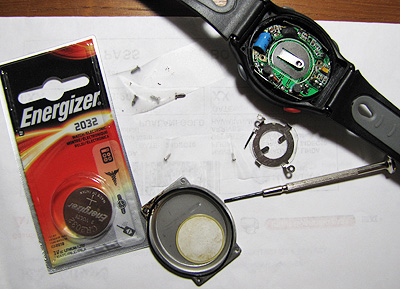
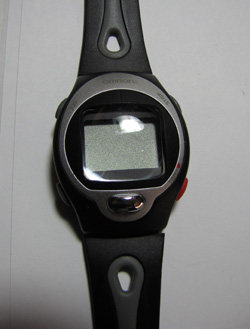
I use a heart rate monitor while exercising. It consists of a strap around the chest and a wristband to provide the read out. The wrist unit is like a regular digital watch, with the additional ability to detect the heart rate data–at least until the battery dies.

I found myself faced with doing battery microsurgery.

Step 1: take it apart

But would it ever work again??

Step 2: determine battery type; determine I don’t have that type. Send husband to buy it.

Step 3: Using tweezers, tiny screw driver, and reading glasses, put it back together.

Hrmmm…most discouraging:

Step 4: Analysis

Well, actually, the clips on the battery holder don’t seem to fit very well, er, maybe the battery is upside down?

Repeat steps 1 and 3.

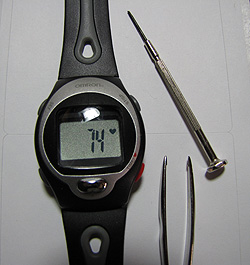
My heart beats in victory!

Yes, I know I should be writing. Off to do that now. Really.

I Haz Gurl Gloves

June 4th, 2011

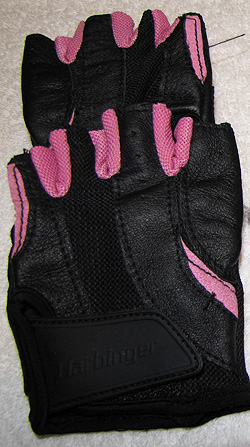
Yes, I do hold onto things way too long. The last time I bought gloves for weightlifting, I don’t think there were girl gloves. This time I had three(!) choices, so naturally I bought the ones with pink trim.
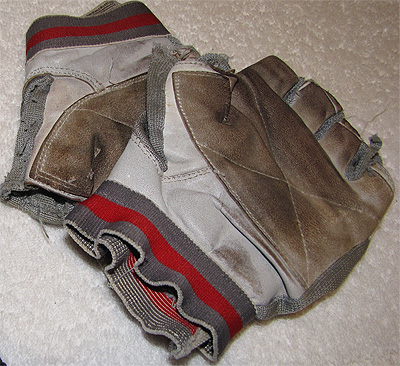

Time to say goodbye to the old veterans, but they’ve been good to me.

Book Rave: The Cloud Roads

May 29th, 2011

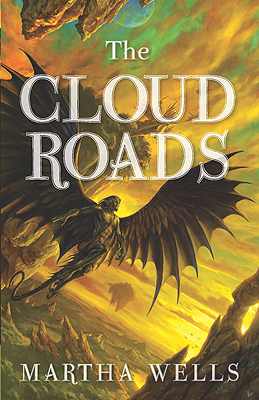
The Cloud Roads by Martha WellsThis is a terrific book. I thoroughly enjoyed it–and probably spent too much time reading it during an otherwise rather discouraging week.

The main reason I grabbed a sample for my Kindle is because Kate Elliott tweeted how much she liked the story world (again proving the power of word-of-mouth!). If I’d been on my own, I don’t know if I would have picked it up. Honestly, the cover doesn’t do much for me, and I’m fairly meh about the title–but the story’s what counts and the story is enthralling.

The protagonist is named Moon, and he’s a being who can shift between groundling form (basically human) and a rather fierce and dangerous winged being. The Cloud Roads is a fantasy. There is no time spent on trying to concoct an explanation for how or why this is possible. It’s simply magic–and this level of non-explanation works absolutely perfectly in the context of the story.

Moon is an outsider, belonging nowhere, but desperately wanting to belong, though unwilling to admit it. His adventures within an utterly fascinating and incredibly diverse and detailed story world are simply enthralling.

The Cloud Roads is the first book I read after finishing Bob Meyer’s fascinating civil war epic Duty, Honor, Country. I started three or four other books in between, but none caught my interest until The Cloud Roads, and then I was hooked from the first page. It’s not that anything truly compelling happened on page one, it’s just that Martha Wells has such a lively style of writing that I knew right away I was in for a good read. I’ve already grabbed a sample of another one of her books.

It’s the Relationships

May 24th, 2011

Bill Clinton’s presidential campaign was famous for the campaign staff’s irreverent slogan, “It’s the Economy, Stupid.” I’m getting very close to posting the writer’s corollary above my desk: “It’s the Relationships, Stupid.”

This was brought home to me in what might sound like an odd way: my son recently introduced me to Riddick, the Vin Diesel character originated in the movie Pitch Black and reprised in The Chronicles of Riddick.

Pitch Black is a classic monster movie. It uses the typical plot skeleton of a diverse group of characters brought together by a disaster who have to learn to work together as they get picked off, one by one. Sounds cliché, but it was very well done. The characters, each with their own skills and quirks, were quickly building relationships–caring about each other, or fighting with each other, but definitely working on those human connections. The biggest driving force of the internal plot was the dual question of whether the outcast/criminal Riddick would be accepted by the group, and whether he would in turn accept a responsibility for helping the group. I enjoyed this movie a lot.

The Chronicles of Riddick was more problematical. This movie looks great. Think of an anime performed with live action characters–that’s what it looked and sounded like to me. Clearly a lot more money was spent on this movie than on Pitch Black. But about two-thirds of the way through I started wondering why I wasn’t emotionally involved in the story, and for me the quick answer was that the relationships were transient or entirely missing. In this movie Riddick is most often entirely on his own. Other characters come and go—way too many characters, honestly—without any real work done on the push and pull of relationships that matter. Yes, in the last third or so of the movie Riddick reconnects with a character from Pitch Black, but it felt like too little, too late, with too much hostility anyway.

I really like Vin Diesel on-screen and I think both movies are worth watching, but for me, Pitch Black is the better of the two.

In recent years I’ve dealt with some problems in my own writing, and what I’ve learned from it is that it’s not only a matter of having meaningful relationships between your characters, but also having tension and questions in those relationships. Will they get together? Will they have a falling out? Will a third party upset the balance? Will jealousy cause things to blow apart?

A story needs more than great adventure. It needs risk-filled human relationships to ignite the reader’s emotions.