Whining On Twitter Can Pay Off
Saturday, August 25th, 2012

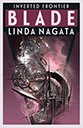

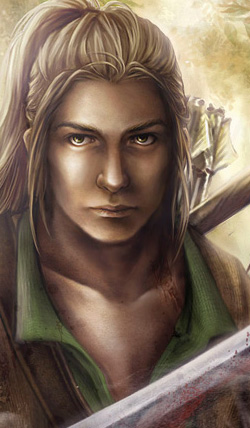 Detail from the cover of The Dread Hammer; digital painting by Sarah Adams.
 This is the first time I’ve had two stories debut in the same month. Story #1 was “Nahiku West,” a police procedural in a nanotech-saturated story world. Story #2 is part of the August edition of Lightspeed Magazine. The story has been available as part of Lightspeed’s ebook edition, but starting today it’s available to read free online — or you can listen to the audio book version!
“A Moment Before It Struck” is a prequel story to my novel The Dread Hammer. It’s less than 5,000 words so it won’t take you long to read. Why not take a look?
And do consider buying the ebook edition of Lightspeed Magazine, for an easy-to-read version of all this month’s stories.
Lois Tilton reviews short fiction at Locus and has some nice things to say about my recent Analog story “Nahiku West,” giving it a “Recommended.”
The story is not available online, but the August issue of Analog can be purchased in both ebook and print form.
My current work-in-progress is a near future thriller that opens with an extended sequence of scenes comprising Part 1 of the story.
The transition to Part 2 is abrupt and, I think, effective. After that there are rebuilding scenes — transitions — that will eventually get the story to the next big action sequence.
A lot is going on in these passages. The protagonist has a lot to do and see, there are a fair number of other characters involved, and many things need to be accomplished from a plot perspective to get all the chess pieces in place.
I’ve been plowing through this section at a fairly good pace using a lot of short scenes, each with its own challenge for the protagonist. I’m constantly asking myself, what is necessary? How much can I skip? Do I need to communicate this next part in the form of a scene, or can I just summarize it in a paragraph of narrative and move on?
Many times I’ve started to do a simple narrative summary and been dissatisfied, leading me to switch to a scene. “Show don’t tell.†Not a rule to follow slavishly, but one to consider.
I have some concern that all these scenes will result in an unpleasant, jerky sense of progress — but that may just be the way it feels when I write it.
I also have a suspicion that I might wind up cutting or consolidating much of what I’m working so hard now to create. But historically, it’s been rare for me to cut much from a novel. It’s been far more common for me to underwrite the first draft, and then fill in details on the second round. So we shall see.
Despite these concerns, my goal at this point is to just keep moving forward. I’m learning a lot about the story as I go along, and if I do need to cut or consolidate later, I’ll have a much better grasp of what I need to keep and what I can get rid of. I keep muttering to myself “trust the process.†This mantra represents a big change for me, because in the first phase of my writing career I was a determined revisionist, who did not move on to the next chapter until the current one was clean and polished.
In no sense would I describe this manuscript as clean and polished, but it’s definitely growing in a way that makes me impatient to write more.
Environmental cues can condition the brain to easily engage in a specific task. People accustomed to working in an office can walk in the office door and be in “work mode,” because that’s what they do there.
For me, it’s a similar effect upon walking into the gym. My brain knows what’s up and even if I go in reluctantly, the environment quickly puts me into “workout mode” and things generally go well.
The same theory should hold for writing: show up at the same place everyday, sit down to the keyboard, and the brain should switch into “writing mode.” If only!
Personally, I usually have a very hard time settling into writing mode, and it can take me hours to immerse into the story. Maybe this is because I use my laptop for many things other than writing, i.e. webwork, social media, updating my books at the various vendors, etc. So the environmental cue — the presence of my laptop — is not specific to writing. There is always the possibility that I could or should be doing something other than working on my next book or story — and all of those things are easier to do than writing, and therefore tempting. As a rule, my mind starts off jumpy. I’m thinking of other tasks and am very distractible.
So lately I’ve tried a new tactic. I’ve adopted a particular song as a kind of ironic theme to the novel I’m currently working on. When I sit down for a writing session, I plug into my iPod, start the song, and start working. I replay the same song three or four or more times — as many as it takes to get me into the flow of the work at hand — and I don’t play it at any other time because for now at least, the purpose of this song is to cue my brain that it’s time to work on this particular book.
And it helps. It really does. I’m squandering a lot less time at the start of a writing session than in the past.
If you want to try this technique, a couple thoughts on making it work:
First, I started doing this during the brainstorming phase of the book, in sessions of nonstop, noncritical, stream-of-consciousness writing. So from the beginning I was actually writing as the music played, not contemplating writing.
Second — make sure you really like the song!
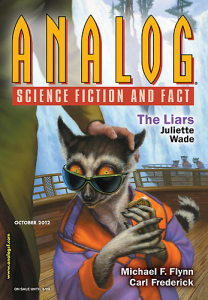 Analog’s October issue is now available, and it includes my story “Nahiku West.” This one is pretty special to me, not just because I like the story, but because it’s the first short fiction that I wrote since “Goddesses,” which was published in 2000!
“Nahiku West” is set in the same story world as my Nanotech Succession novels. It takes place in the years before The Bohr Maker and features the early life of a character from that book, Zeke Choy. If you get a chance to read it, please let me know what you think.
The issue you want to look for is the one pictured at right. The illustration is for the issue’s cover story, “The Liars,” by Juliette Wade. I haven’t had a chance to read it yet.
Analog has a print edition, which is presumably out in bookstores now. I don’t know for sure though, because there aren’t any bookstores around here anymore. However, you can definitely buy an ebook-version. A single issue or a subscription can be purchased from Amazon or Barnes & Noble.
I’ve heard reports that my story “Nahiku West” is now out and in the hands of subscribers to Analog Science Fiction & Fact. It’s the October issue, and I think it’s not generally available just yet — not surprising, given that it’s still July.
I’ll post more here as I learn more, but if you’ve seen the issue, please let me know.
It’s 8:30 AM and I’m sitting in my antique-filled room at a quaint little hotel in Lincoln City, Oregon. I’ve spent the weekend attending a workshop put on by Dean Wesley Smith. This morning will be the last session and then I’ll head north for the next leg of my trip. This is the first chance I’ve had to write something other than assignments for the workshop.
It’s been a great weekend. The subject of study was “Pitches & Blurbsâ€â€”basically, how to describe a book in a way that will encourage browsing book-buyers to give it serious consideration. Was it worthwhile coming all this way just to learn how to describe a book? Yes, indeed! Not only have I picked up ideas entirely new to me and had a chance to practice them, with feedback, but there is an invigorating pleasure in meeting with other writers who are enthusiastic about their craft and their business.
Because writing is a business. My fiction is what produces my income—not anywhere near enough to live on at present, but I’m hoping for better, because I’d like to stay in this business for a long, long time.
For most of my career I have not treated writing as a business. That changed when I got into indie publishing, but despite the forward progress, I still have a lot to learn. Learning is fun though. Challenging myself to do new things keeps it all fresh.
And yes, I hope to come back to Lincoln City before too long, to try out another workshop.
 Powerful women populate my novel, Tech-Heaven, in a story that explores the impact of cryonics, the slow development of nanotechnology, and political issues surrounding both.
But is Tech-Heaven a feminist novel? What is a feminist novel anyway?
The protagonist of this story is a woman, Katie Kishida. The two primary antagonists are women as well — Senator Ilene Carson and Roxanne Scott — who are both complex characters in their own right, though they also serve as the face of broad-based social forces.
But here’s the catch: at the center of the conflict between these three women is a man, Tom Kishida. He’s Katie’s husband, Ilene’s brother, and Roxanne’s friend. He’s also the dead man the story revolves around, his body preserved in liquid nitrogen while those who love him wrestle over his fate. Katie wants to rescue Tom, to see him through to a time when advancing technology can repair his body and restore his life. Ilene and Roxanne see things differently.
As several reviewers noted, at its core, Tech-Heaven is a romance, but be warned: it’s a grimly determined one.
What I like most about the character of Katie Kishida is that she’s not remotely a superhero. She’s starts the story as a nearly ordinary wife, mother, and businesswoman, but after her husband’s death her obsessive determination to make cryonics real and workable changes everything: her life, her relationships, and the world around her.
Out of all my novels, I think Tech-Heaven is written closest to a “mainstream†style, with scenes of daily life and reflection included in what becomes from time to time, a bizarre narrative.
The story is a very American one, set primarily in California and reflecting many aspects of American culture.
It’s not directly concerned with the role or status of women, assuming instead that women are capable players — or more accurately, that people in general are as capable as they choose to be. Alliances between characters are not made across gender lines, but are founded on shared beliefs and shared goals.
The story also includes mixed-race marriages while paying hardly any attention to them, because in my experience, when you’re living inside one, that’s how it is. But the story does pay attention to love, family, obligation, ethics, politics, and the determination to see a task through to the end.
Tech-Heaven is not a book aimed particularly at men or women, but at readers interested in exploring different sides of controversial ideas and the fallout of advancing technology.
Is it a feminist novel? If it’s not, then the meaning of “feminism†is uselessly narrow. Is it a humanist novel? I like to think so. From a marketing perspective, I consider it a near-future thriller. We’re already into the early years of that future and it seems to me the story still holds up disturbingly well.
Where to sample/purchase the ebook:
Book View Café (worldwide)
Amazon.com USA
Amazon UK
Barnes & Noble (USA)
Where to order the print version:
Amazon USA
Amazon UK
Booktopia (Australia)
Barnes & Noble (USA)
Powell’s Books (USA)
There’s a theory out in the writing world that if you just keep writing, your subconscious will do all the heavy lifting, and out of the chaos a story will coalesce. Personally, I’m skeptical. Brainstorming sessions involving non-stop writing are great for generating ideas out-of-nowhere, and it’s not uncommon that I’ll get useful and spontaneous dialogs going between my characters this way. This is all very valuable stuff.
But…
I’ve spent several days now coaxing into existence characters, plot, scenes, and general ideas for the new novel-in-progress. I’ve got several thousand words in “brainstorming†files and, much to my surprise, over 6,000 words of actual story. The catch is, the story so far is neither continuous nor coherent. I’m envisioning a book in four parts. So far, I’ve got the opening scene and closing scene of part 1, a tiny bit of part 2, some in-between stuff, and lots of ideas for what else needs to be going on in the first 15,000 words or so. But the ideas that I have are not organized. The conflicts aren’t clear. The groundwork on which the remainder of the novel will rest is not at all well-established.
So it’s time for some heavy lifting, which unfortunately for me is a conscious process. I would love it if my subconscious would take over plotting, but it hasn’t happened yet. For me, this is the fallacy of words-per-day writing goals. If I’m unsure of the details of the plot, or if I don’t have a real vision of the next scene, knowing what to write about is problematical.
So I’m off to try to hammer disparate ideas together into a coherent opening plot, in the hope that I can get to the point where writing the scenes is like taking dictation. That happened last night when I wrote the closing scene of part 1. Usually, writing is hard. When it’s not – when a scene just flows – that’s a rare reward, and one of my favorite moments of the writing process.
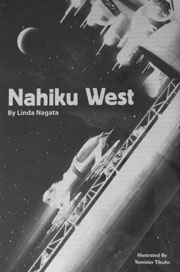 Illustration for Analog by