

Linda Nagata: the blog at Hahví.net


Title Contest! + short story sale

December 20th, 2013

I have this quirk of personality. I don’t like writing the same sorts of things for any extended period of time. This is why I’ve tended to go from far-future stories, to very near-future, to high fantasy, to middle-grade SF, to gritty fantasy, to magic realism… Easily bored, I guess. And who needs an author platform anyway?

At any rate, when John Joseph Adams, editor of Lightspeed and Nightmare magazines, as well as many anthologies, contacted me about writing a military fantasy story, my response was an enthusiastic “Yes!” Here was a chance to escape for a bit from science fiction, in which I’d been immersed for quite some time.

The result was a story presently titled “The Way Home” (this could still change) — and it’s a story I’m very happy with.

But there is a problem: the anthology is still untitled. JJA is still trying to come up with the perfect title for it and he’s encouraging all of y’all to help out by holding a name-this-anthology contest. If you’d like to participate, you can read more about it and enter your title ideas here — and you can also see the list of contributing authors.
Award Eligible Work — 2013

December 17th, 2013

Here’s the annual list of all my 2013 award-eligible work in one easy-to-read location…

Note to SFWA members: reading copies of both the novel and the stories are available in the forum, in epub and mobi formats.

Novel:
The Red: First Light — published in print and ebook editions by my own imprint Mythic Island Press LLC and reviewed by Russell Letson (Locus), Paul Kincaid (Through the dark labyrinth), and Stefan Raets (Tor.com), who called it “…an amazing novel.”

Short Story:
“Through Your Eyes”Asimov’s, April/May 2013 issue

“Out In The Dark”Analog, June 2013 issue

“Halfway Home”Nightmare Magazine, September 2013 issue. Read it online.

Short Story Sale: “Attitude”

December 16th, 2013

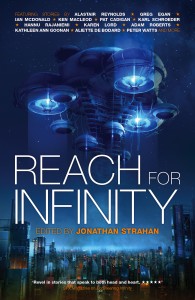
Reach For Infinity-preliminary coverWay back in January of this year, editor Jonathan Strahan invited me to submit a short story to an anthology he was developing, to be called Reach For Infinity. The anthology will be the third volume of the “Infinity Project,” following on the first two books Engineering Infinity and Edge of Infinity. The subject for the new book is “that period when we’re trying to get off Earth and into space.” Sounds simple, right? Well, it wasn’t simple for me.

I spent a lot of time brainstorming, developing and discarding ideas, either because they didn’t inspire me, or they seemed too involved to handle at short story length. It took me nine months to come up with an idea that intrigued me enough to build a story around it. I put together an outline first, and then set to writing. The result is a story called “Attitude.” After a brief misdirection to a spam folder, it reached Jonathan safely, and was soon accepted.

Look for “Attitude” in Reach For Infinity, due out from Solaris books in June 2014. Read more about the anthology here.

Illiteracy & Scribbling

December 15th, 2013

Most large tourist sites in the USA offer at least some information in multiple languages. The same is true in Japan. English is the most common option there, with Korean and Chinese offered where there are a lot of tourists. It’s very reassuring to hear an English announcement of an upcoming destination when riding a train or a bus! And many signs are written in both Roman and Kanji, making life far easier for an American traveler like me who does not speak or read Japanese.

But not everything is available in English — not by a long way. So for me, traveling in Japan is an experience of effective illiteracy. Often, I cannot read even basic information. This makes it very difficult to know what’s up, what is possible, what is available, or where to go — and really drives home the importance of literacy for everyone in the modern world.

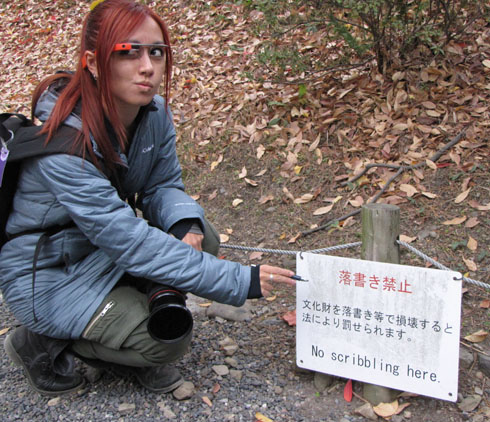
On the other hand, many businesses in Japan do have English names — although these names often don’t make sense to an English speaker. I take this as a warning to writers (like me!) who occasionally employ foreign words and phrases from languages we don’t speak. Caution is called for! But on the positive side, the results can be quite humorous. At the end of a long day, we ran across this sign, randomly placed beside a garden on the grounds of a castle in Kyoto:
no_scribbling_sign
But if we cannot scribble here, than where shall we scribble?

After a bit of laughter and debate, we decided this probably meant “No graffiti,” though even that left us puzzled, because there was nowhere to write except on the sign itself. And of course, in our perverse American way, being told not to do something that it had never occurred to us to do, made us wonder if maybe we ought to…

But no! Of course we didn’t scribble. But it made for a good photo op.

Later we were told that graffiti is considered a real problem. I saw a few “tags” while we were there, but if graffiti is a problem, to this casual observer it seems to be a problem under control.

Japan In Late Fall

December 14th, 2013

Last spring we made our first visit to Japan, arriving in Fukuoka at the height of cherry blossom season. It was a terrific trip, and my husband and daughter were soon plotting a return that would let us view the fall foliage. We’ve just returned from that adventure, and it too was a success.

The Internet decreed that early December would be the peak of the fall foliage season in southern Japan, so we set our trip for that time — though December seemed very late in the year to me. As it turned out, we were probably two weeks past the peak of the maple foliage season. Nevertheless, there was still a lot of color and many spectacular sights. The advantage of our late arrival? Far smaller crowds than we would have faced only a week or two earlier.

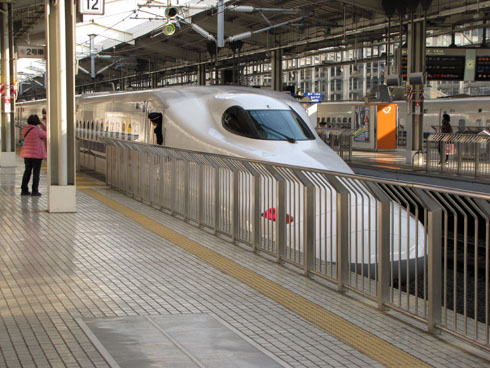
We did most of our in-country traveling on the Shinkansen, taking the train from Fukuoka to Kyoto, and then Kyoto to Kumamoto via Himeji. The Shinkansen is awesome, and a joy to ride, although views are limited because much of the track in southern Japan passes through tunnels, or between walls that I presume are noise buffers.

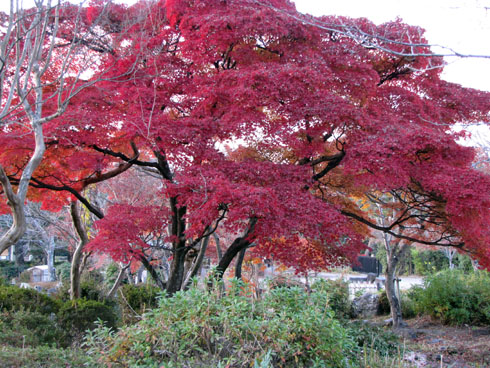
Kyoto has a historic district with traditional streets and buildings, that house many small shops and restaurants. Shrines and gardens are everywhere. This is one of the brightest Japanese maples we saw, thriving in a Kyoto park:
maple_tree_at_Kyoto_park
Read the rest of this entry »

Maveric: the bird-like drone

November 30th, 2013

I’m just going to leave this here. Let me know what you think about it. The raptors in a war zone are probably not going to last long…

And here’s the source article over at Wired: Army Scores a Super-Stealthy Drone That Looks Like a Bird

Guest Post:
Doug Farren on Thermodynamics

November 27th, 2013

I met Doug Farren in the summer of 2012 at the Launchpad Astronomy Workshop in Laramie, Wyoming. Doug is a popular and successful indie writer of science fiction and fantasy. Check out his Amazon page here. Doug does an occasional column on “The BS in SF.” I really liked his post on thermodynamics and asked if I could re-post it here. Enjoy!

Translight-by-Doug-FarrenThermodynamics: I consider it the bane of science fiction. Nothing is 100% efficient and most of the loss in efficiency shows up as heat. A perfect example is something I deal with every day—power production. Nearly every large power plant has a cooling tower and all that vapor pouring out the top is waste heat. How much? About 65% of the energy generated in the reactor or boiler! This waste heat creates a MAJOR problem for science fiction. In order to understand why, let’s take a step back and talk about heat transfer for a moment.

Heat can be transferred in three ways: convection, conduction, and radiation. Convection and conduction require the heat source to be in physical contact with the transfer medium. A spacecraft is isolated from everything else by the vacuum of space which rules out both of these as a means of dumping waste heat. That leaves radiation, which is the transfer of heat through the emission of electromagnetic radiation. This means that if you want to keep your ship cool you need large radiators to dump the excess heat.

If you look at a picture of the International Space Station (ISS), the first thing you will most likely notice are the huge panels extending away from the primary truss. The largest of these are the solar panels that provide the station with electricity. The others are the heat radiators. Damage enough of these and the station will quickly become uninhabitable. Ever wonder why the space shuttle kept its cargo doors open the entire time it was in space? Because the inside of the doors served as heat radiators to keep the shuttle cool. If you’re building a nuclear powered warship equipped with directed energy weapons, you’re going to have to get rid of a tremendous amount of waste heat. To do that, you’ll need a heat radiator with a very large surface area. Now you have a problem. Read the rest of this entry »

The “Vast” Method

November 26th, 2013

So…I just finished a very rough draft of The Red: Trials, the follow up to The Red: First Light. There is A LOT of fixing up, figuring out, and filling in to do — and maybe there will be fatal flaws, I don’t know — but this was a very difficult book for me, so getting to this point is a triumph.

For those of you who are writers, I thought I’d share my experience of how I finally got those last pages done, in case you might find it helpful someday.

With many writers it’s common to write faster as you approach the end. That’s usually the case for me, but it didn’t happen this time. I was still slogging through it, even though I really didn’t have that far to go.

This has happened to me before. Long ago, when I was writing the first draft of my novel Vast, I was stuck. I was maybe 80% through and I couldn’t write anymore. I had a decision to make about how the end would work, and the uncertainty of what that decision would be worked to hold me back. I’m a very linear writer. I write chapter 1, then chapter 2, and so on, through to the end. I don’t jump around — until I got stuck writing Vast, that is. Eventually, out of desperation or despair, I jumped ahead and wrote the climactic end of the novel–and after that, writing the rest of the draft was relatively easy.

Every novel is different. With Trials I wasn’t facing a decision about the end. I knew how it would end — the generalities anyway, if not the details — but as with Vast, it turns out I needed to write the climactic ending scene before I could write all the scenes leading up to it. After a terrible writing day, I sat down on the evening of November 21, and skipped to the end. 1500 words later I felt far, far better about things. Over the next five days I added another 8500 words to create the missing scenes. I won’t say the writing was painless, but it was much less of a struggle than almost all the rest of the novel.

So this is the Vast method: when you’ve struggled close to the end but the story still isn’t writing itself, try writing the climactic scene first, and then drop back and fill in the rest.

Sometimes it works.

So you don’t like hard science fiction…?

November 14th, 2013

Over the past year or so I’ve read several disparaging comments about my favorite kind of science fiction — the hard stuff. So I thought I’d address some common misconceptions about the sub-genre in a post that published today at io9.com. Please check it out and let me know what you think.

Thank you!

November 13th, 2013

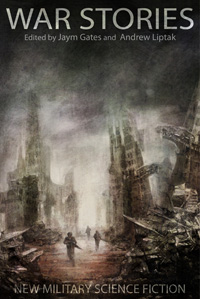
War Stories AnthologyI’m pleased to report that the War Stories Kickstarter successfully funded yesterday, two days before the deadline! This means the anthology, edited by Jaym Gates and Andrew Liptak, will move forward, and see publication in 2014. It will include my story “Light and Shadow.”

So a big thank you to everyone who supported the project and who helped to spread the word!